








Cloud Computing 101: Choosing Between AWS, Google Cloud, and Azure

It won’t be long before enterprises begin shutting down traditional data centers in favor of cloud services. As businesses rapidly shift to the cloud, the question arises:

Which cloud provider
should you choose?

Let’s discuss the key differences between three options: AWS, Google Cloud, and Azure, helping you make an informed decision tailored to your cloud computing needs. We will explore each of their unique features, pricing structures, and ideal use cases to guide your selection process. At Veritas Automata and Yuxi Global powered by Veritas Automata, we consider ourselves cloud agnostic.

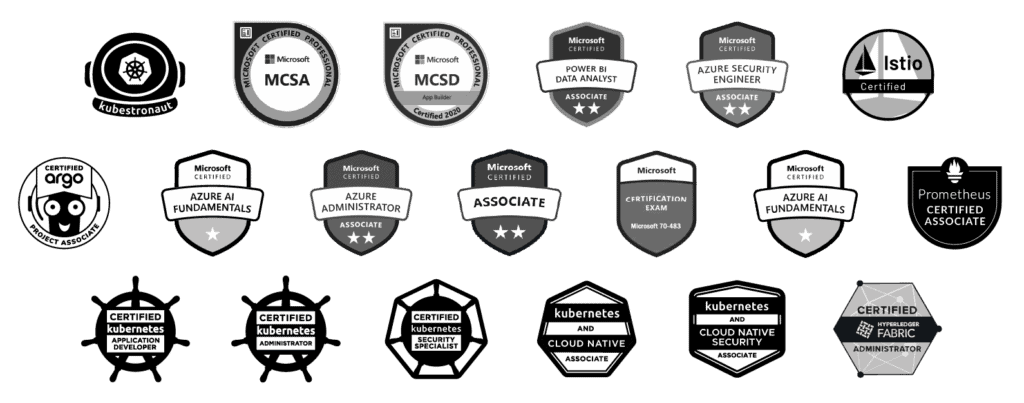
Why are we so passionate about this? We have over 20 team members certified within these cloud providers.

Unique Features

Amazon Web Services (AWS), the pioneer in cloud computing, offers an unparalleled range of services and global reach. AWS provides over 200 fully-featured services, ranging from computing power and storage, to Machine Learning and analytics.

This extensive service catalog makes it a comprehensive solution for various business needs. With the largest cloud infrastructure footprint, AWS operates in 24 regions and 76 availability zones worldwide, ensuring global availability and reliability. Additionally, AWS boasts a robust marketplace and an extensive partner network that supports a wide variety of third-party applications and services, further enhancing its ecosystem.

Pricing

AWS uses a pay-as-you-go pricing model, which allows for flexibility and scalability. The AWS Free Tier offers access to a broad range of services for free, within certain usage limits, making it an attractive option for startups and small businesses. AWS also offers Reserved Instances, providing significant discounts for customers who commit to using certain services over a one- or three-year term. Additionally, AWS Savings Plans offer flexible pricing plans with lower prices compared to on-demand pricing, based on long-term usage, making it cost-effective for sustained operations.

Use Cases

AWS is ideal for startups and small to medium-sized enterprises (SMEs) due to its flexible pricing and extensive service offerings. It is also a preferred choice for large enterprises because of its advanced security features, compliance certifications, and enterprise-grade solutions. Developers benefit from AWS’s rich set of development tools and APIs, which facilitate rapid deployment and innovation.

Unique Features

Google Cloud leverages Google’s expertise in search, Artificial Intelligence (AI), and data analytics to provide a powerful cloud platform. GCP offers industry-leading AI and Machine Learning tools, such as TensorFlow and Google AI, which integrate seamlessly with other Google services. This makes it an excellent choice for organizations focusing on AI-driven projects. GCP’s big data and analytics tools, like BigQuery, offer powerful, scalable data warehousing and analytics solutions. Moreover, GCP’s Anthos enables hybrid and multi-cloud deployments, enhancing flexibility and reducing vendor lock-in, a crucial feature for businesses looking to maintain operational flexibility.

Pricing

GCP’s pricing is transparent and competitive, featuring automatic discounts for sustained usage of certain services through its Sustained Use Discounts. Committed Use Contracts offer additional discounts for customers who commit to using resources for one or three years. GCP also uses per-second billing, ensuring precise billing so that customers only pay for what they use, making it cost-effective for varying workloads.

Use Cases

GCP is best suited for data-centric organizations due to its superior data analytics and Machine Learning capabilities.

It is also an excellent choice for developers and AI enthusiasts, thanks to its comprehensive tools for AI development and deployment. Businesses with hybrid or multi-cloud needs benefit from GCP’s flexibility in hybrid and multi-cloud environments, allowing them to integrate seamlessly with their existing infrastructure.

Unique Features

Azure leverages Microsoft’s enterprise software expertise and offers seamless integration with its products. Azure Arc extends Azure management and services to any infrastructure, making it an ideal solution for hybrid deployments. Azure’s tight integration with Microsoft products, like Windows Server, SQL Server, and Office 365, enhances its appeal for businesses already using these solutions. Additionally, Azure provides extensive support for a variety of programming languages, frameworks, and tools, making it a versatile choice for developers.

Pricing

Azure’s pricing is flexible and straightforward. The Azure Hybrid Benefit offers discounts for customers using Windows Server or SQL Server licenses, providing significant cost savings for enterprises. Azure also offers Reserved Instances, which provide potentially large savings for customers who commit to long-term use. Built-in cost management tools help businesses monitor and optimize their cloud spending, ensuring cost efficiency.

Use Cases

Azure is perfect for enterprises that require seamless integration with existing Microsoft environments and products. Its superior tools for managing hybrid cloud setups make it ideal for businesses with hybrid cloud environments. Developers benefit from Azure’s extensive support for diverse programming languages and frameworks, enabling them to build and deploy applications efficiently.

So Which One is the The Right Choice?

Choosing the right cloud provider—AWS, Google Cloud, or Azure—depends on your specific needs and priorities. AWS stands out for its comprehensive service offerings and mature ecosystem, making it a versatile choice for businesses of all sizes. Google Cloud excels in data analytics and AI, making it perfect for data-centric and innovative organizations. Azure, with its strong enterprise integration and hybrid cloud capabilities, is ideal for businesses deeply embedded in the Microsoft ecosystem.
Each platform has its unique strengths, and understanding these differences is crucial for making an informed decision. As you evaluate your options, consider your business requirements, technical capabilities, and future growth plans to select the cloud provider that best aligns with your goals.
Embrace the cloud with confidence! Get in touch with us to learn how we can help you leverage the power of AWS, Google Cloud, or Azure to drive your success in the digital age.

Computer Aided Design (CAD) Software Solutions for a Top Engineering Solution Provider

Veritas Automata Gerardo Calvo

Gerardo Calvo

Client Overview and Challenge
A prominent South Korean company specializing in civil and structural engineering and finite element analysis has earned its place as one of the world’s top engineering solution providers. Headquartered in South Korea and with a branch in the United States, the company develops and distributes engineering software and aims to empower professionals in the industry with cutting-edge tools and services.
The engineering solution provider faced a pressing challenge in its quest to maintain its market share and relevance in the civil and structural engineering domain, especially in the United States and South America. The company provided only offline licenses for its Computer Aided Design (CAD) software, which restricted the ability of teams to collaborate effectively. While competitors offered cloud-based solutions and collaborative environments, the engineering solution provider lagged behind, unable to efficiently store files or offer immediate access to design data on various devices, particularly for CAD drawings.
Technologies Used
Solution
The primary goal of the project was to develop a web application that would enable teams using the engineering solution provider’s CAD software to collaborate, discuss, edit, and enhance designs. Key components included file visualization, secure file storage, user management, action tracking, and collaboration features. The project was executed in multiple phases, beginning with a prototype and the Minimum Viable Product (MVP), followed by incremental development.
The project was deemed successful in terms of technology developed, and Veritas Automata successfully validated the engineering solution provider’s need for collaborative platforms, prompting them to bring the application in-house to expand its suite of solutions. Veritas Automata successfully narrowed the gap with competitors who had already integrated web applications into their offerings.

Demystifying AI vs. ML: Unveiling the Foundations of Modern Technology

Two buzzwords continually dominate the discourse: Artificial Intelligence (AI) and Machine Learning (ML). They are the engines propelling us into the future, reshaping industries, and unlocking previously unimaginable possibilities.

Let’s dissect the foundations of AI and ML, diving deep into Bayesian statistics, Generative Adversarial Networks (GANs), Transformers, and Neural Networks to provide you with a crystal-clear understanding of these revolutionary concepts.

The Pillars of AI and ML

Before we get into the intricacies of Bayesian statistics, GANs, Transformers, and Neural Networks, let’s establish a fundamental distinction between AI and ML, shall we?

AI is the broader concept encompassing machines or systems that can perform tasks that typically require human intelligence, such as problem-solving, understanding natural language, and recognizing patterns. Interested in the Pros and Cons? After reading this blog, check out Navigating the Pros and Cons of Artificial Intelligence: Veritas Automata’s Solutions.

ML, on the other hand, is a subset of AI. It involves training machines to learn from data and make predictions or decisions based on that learning.

Now, let’s assertively explore the foundations that underpin these transformative technologies:

Bayesian statistics is the bedrock upon which AI and ML make decisions in an uncertain world. It utilizes probability to model uncertainty and update beliefs as new information becomes available.

In AI and ML, Bayesian models are instrumental in tasks like natural language processing, recommendation systems, and anomaly detection. They enable machines to make informed decisions even when confronted with incomplete or noisy data.

Generative Adversarial Networks, or GANs, are the artists of the AI world. They consist of two neural networks – a generator and a discriminator – locked in a fierce competition.

GANs are responsible for creating realistic images, videos, and even audio samples. They have revolutionized content generation, making AI a creative powerhouse capable of generating art, music, and more.

Transformers are the driving force behind Natural Language Processing (NLP) breakthroughs. These models utilize self-attention mechanisms to process input data in parallel, making them exceptionally efficient for processing sequential data like text.

They underpin AI applications such as chatbots, language translation, and sentiment analysis. Transformers are reshaping the way we interact with machines, making human-like language understanding a reality.

Neural Networks are the brains of the AI and ML world. Modeled after the human brain, they consist of layers of interconnected nodes (neurons) that process information.

Deep Learning, a subset of ML, relies heavily on Neural Networks to perform complex tasks such as image recognition, speech recognition, and autonomous driving. Neural Networks have enabled machines to mimic human cognition, pushing the boundaries of what AI can achieve.

The Future Beckons

As we dissect the foundations of AI and ML, it becomes clear that these technologies are not just buzzwords; they are the driving force behind our digital future. Bayesian statistics, GANs, Transformers, and Neural Networks are the building blocks upon which AI systems are constructed, enabling them to understand, create, and adapt.

The journey is far from over.

The future promises even more remarkable advancements as we continue to harness the power of these foundational concepts. AI and ML are not just tools; they are the architects of a bold new era of innovation, where the impossible becomes achievable, and the extraordinary becomes the norm. So, buckle up, because the future awaits, and it’s assertively AI and ML-driven.

Invest in Trust and Innovation

When you partner with Veritas Automata, you invest in trust, innovation, and a future where automation transcends boundaries. We don’t just follow industry trends; we set them. Our mission is to push the boundaries of what’s possible, creating solutions that empower you to navigate the complexities of the digital age with confidence and assertiveness.

In the world of AI and ML-driven automation, Veritas Automata is your trusted ally, ensuring you remain at the forefront of innovation and efficiency. We don’t just adapt to the future; we shape it.
Choose Veritas Automata and step confidently into a world where complex automation challenges are met with clarity, precision, and unwavering trust in technology.