







Cloud Computing 101: Choosing Between AWS, Google Cloud, and Azure

It won’t be long before enterprises begin shutting down traditional data centers in favor of cloud services. As businesses rapidly shift to the cloud, the question arises:

Which cloud provider
should you choose?

Let’s discuss the key differences between three options: AWS, Google Cloud, and Azure, helping you make an informed decision tailored to your cloud computing needs. We will explore each of their unique features, pricing structures, and ideal use cases to guide your selection process. At Veritas Automata and Yuxi Global powered by Veritas Automata, we consider ourselves cloud agnostic.

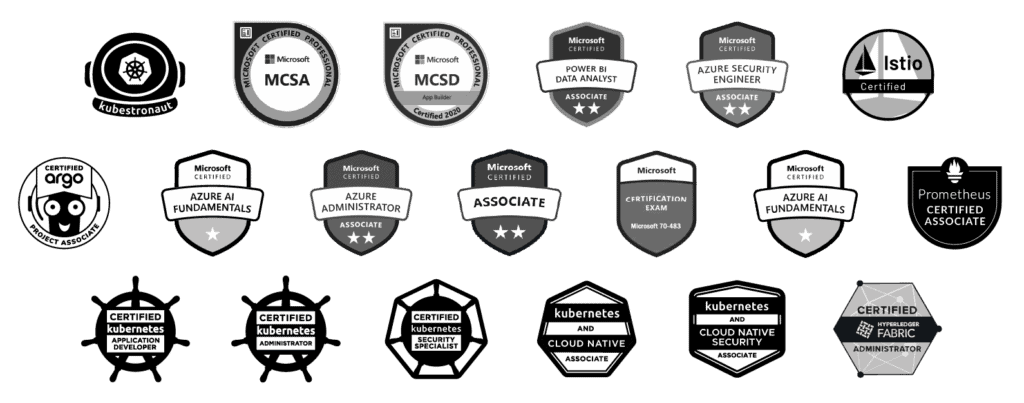
Why are we so passionate about this? We have over 20 team members certified within these cloud providers.

Unique Features

Amazon Web Services (AWS), the pioneer in cloud computing, offers an unparalleled range of services and global reach. AWS provides over 200 fully-featured services, ranging from computing power and storage, to Machine Learning and analytics.

This extensive service catalog makes it a comprehensive solution for various business needs. With the largest cloud infrastructure footprint, AWS operates in 24 regions and 76 availability zones worldwide, ensuring global availability and reliability. Additionally, AWS boasts a robust marketplace and an extensive partner network that supports a wide variety of third-party applications and services, further enhancing its ecosystem.

Pricing

AWS uses a pay-as-you-go pricing model, which allows for flexibility and scalability. The AWS Free Tier offers access to a broad range of services for free, within certain usage limits, making it an attractive option for startups and small businesses. AWS also offers Reserved Instances, providing significant discounts for customers who commit to using certain services over a one- or three-year term. Additionally, AWS Savings Plans offer flexible pricing plans with lower prices compared to on-demand pricing, based on long-term usage, making it cost-effective for sustained operations.

Use Cases

AWS is ideal for startups and small to medium-sized enterprises (SMEs) due to its flexible pricing and extensive service offerings. It is also a preferred choice for large enterprises because of its advanced security features, compliance certifications, and enterprise-grade solutions. Developers benefit from AWS’s rich set of development tools and APIs, which facilitate rapid deployment and innovation.

Unique Features

Google Cloud leverages Google’s expertise in search, Artificial Intelligence (AI), and data analytics to provide a powerful cloud platform. GCP offers industry-leading AI and Machine Learning tools, such as TensorFlow and Google AI, which integrate seamlessly with other Google services. This makes it an excellent choice for organizations focusing on AI-driven projects. GCP’s big data and analytics tools, like BigQuery, offer powerful, scalable data warehousing and analytics solutions. Moreover, GCP’s Anthos enables hybrid and multi-cloud deployments, enhancing flexibility and reducing vendor lock-in, a crucial feature for businesses looking to maintain operational flexibility.

Pricing

GCP’s pricing is transparent and competitive, featuring automatic discounts for sustained usage of certain services through its Sustained Use Discounts. Committed Use Contracts offer additional discounts for customers who commit to using resources for one or three years. GCP also uses per-second billing, ensuring precise billing so that customers only pay for what they use, making it cost-effective for varying workloads.

Use Cases

GCP is best suited for data-centric organizations due to its superior data analytics and Machine Learning capabilities.

It is also an excellent choice for developers and AI enthusiasts, thanks to its comprehensive tools for AI development and deployment. Businesses with hybrid or multi-cloud needs benefit from GCP’s flexibility in hybrid and multi-cloud environments, allowing them to integrate seamlessly with their existing infrastructure.

Unique Features

Azure leverages Microsoft’s enterprise software expertise and offers seamless integration with its products. Azure Arc extends Azure management and services to any infrastructure, making it an ideal solution for hybrid deployments. Azure’s tight integration with Microsoft products, like Windows Server, SQL Server, and Office 365, enhances its appeal for businesses already using these solutions. Additionally, Azure provides extensive support for a variety of programming languages, frameworks, and tools, making it a versatile choice for developers.

Pricing

Azure’s pricing is flexible and straightforward. The Azure Hybrid Benefit offers discounts for customers using Windows Server or SQL Server licenses, providing significant cost savings for enterprises. Azure also offers Reserved Instances, which provide potentially large savings for customers who commit to long-term use. Built-in cost management tools help businesses monitor and optimize their cloud spending, ensuring cost efficiency.

Use Cases

Azure is perfect for enterprises that require seamless integration with existing Microsoft environments and products. Its superior tools for managing hybrid cloud setups make it ideal for businesses with hybrid cloud environments. Developers benefit from Azure’s extensive support for diverse programming languages and frameworks, enabling them to build and deploy applications efficiently.

So Which One is the The Right Choice?

Choosing the right cloud provider—AWS, Google Cloud, or Azure—depends on your specific needs and priorities. AWS stands out for its comprehensive service offerings and mature ecosystem, making it a versatile choice for businesses of all sizes. Google Cloud excels in data analytics and AI, making it perfect for data-centric and innovative organizations. Azure, with its strong enterprise integration and hybrid cloud capabilities, is ideal for businesses deeply embedded in the Microsoft ecosystem.
Each platform has its unique strengths, and understanding these differences is crucial for making an informed decision. As you evaluate your options, consider your business requirements, technical capabilities, and future growth plans to select the cloud provider that best aligns with your goals.
Embrace the cloud with confidence! Get in touch with us to learn how we can help you leverage the power of AWS, Google Cloud, or Azure to drive your success in the digital age.

Cloud and Edge Devices in Action: from Connectivity to Solutions in Veritas Automata’s HiveNet

Veritas Automata Fabrizio Sgura

Fabrizio Sgura

Chief Engineer

This isn't just about connectivity, it's about transforming the way decisions are made at the edge, pushing the boundaries of what's possible in diverse and dynamic environments.

Veritas Automata’s HiveNet stands as a testament to the seamless integration of cloud and edge computing, redefining the paradigms of connectivity and solution delivery. With a keen focus on industries such as life sciences, supply chain management, transportation, and manufacturing, Veritas Automata leverages the robustness of Rancher K3s Kubernetes to ensure unmatched efficiency across cloud and edge environments. This blog explores the intricacies of HiveNet’s architecture and its transformative impact, particularly within the life sciences vertical.

From a business perspective, Veritas Automata’s decision to name it HiveNet wasn’t arbitrary. It was a deliberate move to distribute decision-making to the edge. By moving the brain into a Kubernetes cluster on bare metal, HiveNet avoids cannibalizing cloud services, setting it apart from the conventional cloud providers.

A use case of HiveNet within the life sciences vertical is its application in vaccine distribution and integrity assurance. Leveraging the combined power of blockchain for secure transactions and Kubernetes-based infrastructure for scalable, flexible deployment, HiveNet facilitates the digital chain of custody for vaccines. From manufacturing through to delivery, each step is securely logged and verifiable on the blockchain, ensuring that vaccines are stored, handled, and transported under prescribed conditions.

This not only streamlines the distribution process but also significantly reduces the risk of counterfeit or compromised vaccines entering the supply chain, ensuring public health and safety.

Want the technical aspects?

At the core of HiveNet’s architecture is an open-source, Kubernetes-based infrastructure, augmented with the security and transparency afforded by Hyperledger Fabric blockchain technology. This foundation supports advanced application architectures, including ROS for robotics, XState for finite state machines management, and NATS for Raft-based distributed messaging. The integration of GitOps principles and OTA custom edge images via Mender enhances continuous delivery, fostering a dynamic, robust environment for cloud and edge-native applications.

Adopting HiveNet transcends mere technology implementation; it signifies investing in a strategic asset that elevates operational agility, security, and competitive advantage. For the life sciences sector, this means being able to respond more swiftly to market demands, regulatory changes, and global health challenges, all while maintaining the highest standards of product integrity and patient safety.

Veritas Automata’s HiveNet represents a pivotal shift towards a more connected, secure, and efficient future in digital transaction processing. By harmonizing the strengths of cloud-native computing, blockchain technology, and advanced edge capabilities, HiveNet offers businesses a powerful tool to innovate, secure their supply chain, and maintain a competitive edge in the digital age.
Step into the future with Veritas Automata’s HiveNet, where the realms of cloud and edge computing merge in a groundbreaking symphony of secure and scalable solutions. This journey is more than a technological leap, it’s a revolution across industries, powered by blockchain.

The Art of Orchestration: HiveNet’s Symphony of Cloud and Edge

Veritas Automata Fabrizio Sgura

Fabrizio Sgura

Chief Engineer

Veritas Automata Rodolfo

Rodolfo Leal

Software Engineering Director

Veritas Automata Roberto Galaz

Roberto Galaz

DevOps Engineer

The symphony is not just a fusion of cloud and edge technologies, it's a harmonious blend of trust, clarity, efficiency, and precision.

HiveNet's Foundation: Powering Innovation with Open Source

At the heart of HiveNet lies a foundation, built on open-source K3s Kubernetes and RKE2 – a pre-integrated cloud (AWS) and edge cluster (bare-metal) on the same control plane. This architecture is the cornerstone for the HiveNet Application Ecosystem, providing unparalleled flexibility and scalability.

Orchestrating the Cloud and Edge Dance

HiveNet for Blockchain – a jewel in HiveNet’s crown – simplifies the distribution of processes across roles, organizations, corporations, and governments.

This solution can manage chain-of-custody at a global level, seamlessly integrating with other HiveNet tools to support IoT and Smart Products within broader workflows. Imagine a symphony where each note is perfectly timed and in sync – that’s HiveNet for Blockchain, using the same Kubernetes framework as all HiveNet products. This ensures standardized solutions and efficient deployment of the platform core to the cloud, with the extended edge nodes running on smart devices such as embedded devices, edge computers, laptops–and soon, mobile devices–for enhanced workflow integration.

Hyperledger Fabric: Crafting Trust and Transparency

In the orchestra of blockchain technologies, HiveNet employs Hyperledger Fabric to meet data access, regulatory, workflow, and organization needs. This ensures a secure and transparent transaction management system and establishes a foundation for chain-of-custody applications.

Use Case: Smart Product Manufacturing

Let’s step into the real-world impact of HiveNet’s orchestration prowess with an example of smart product manufacturing: Picture a market category leader in the manufacture and operations of smart products for retail and food. The challenge was clear… finding a path to providing operators the ability to deliver successful interactions with consumers and delivery partners while producing valuable and auditable transactional data.
Veritas Automata took on this challenge by developing an autonomous transaction solution, starting in 2018.
Leveraging Hyperledger Fabric blockchain technology on Kubernetes with Robot Operating System (ROS) for hardware control and ML-powered vision, the HiveNet-powered robotic solution became a reality by 2020. Cloud services integrated seamlessly with bare-metal edge computing devices, creating a multi-tenant cloud-based K3s Kubernetes cluster.

The outcome? Over 20 IoT components in each system, autonomous interactions between the robotic system and consumers, synchronized workflow control, and separate cloud API integrations for each operator. Veritas Automata’s HiveNet solution delivered unparalleled capabilities, supporting the manufacturer’s business requirements and maintaining market category leadership.

Why Hivenet? Elevating Automation to a Symphony

In the grand symphony of automation and orchestration, HiveNet stands tall as a testament to Veritas Automata’s commitment to innovation, trust, and precision. The orchestration techniques showcased in smart product manufacturing exemplify the company’s ability to solve complex challenges logically and intuitively.
For ambitious leaders and executives seeking automation solutions in industries like Life Sciences, Manufacturing, Supply Chain, and Transportation, let the symphony of HiveNet elevate your organization to new heights.